Unlocking Hidden Wagering Pathways Through Layered Promo Structures in Wheel Games
Harper Neumann · Jul 8, 2026
Unlocking Hidden Wagering Pathways Through Layered Promo Structures in Wheel Games
Wheel games continue to draw steady participation across online platforms because their mechanics lend themselves naturally to multi-tiered promotional designs that stretch player engagement over extended sessions. Layered promo structures typically combine initial deposit matches with free spin allocations, cashback tiers, and loyalty multipliers that activate sequentially once certain wagering thresholds are met, creating pathways that remain concealed until players progress through each stage.
Core Components of Layered Structures
Operators build these systems around a base bonus layer that requires a minimum deposit before any additional features unlock, followed by secondary elements such as spin bundles that only become available after the first wagering milestone is cleared. Research from the Nevada Gaming Control Board indicates that contribution percentages for wheel-based games often sit lower than those assigned to slots, which forces players to navigate the structure differently to satisfy overall requirements.
Third-layer elements frequently include time-limited cashback percentages that apply retroactively to net losses once a player reaches a cumulative bet total, and these amounts can then feed into a fourth layer of loyalty points that convert into further credits or exclusive table access. Data from the Canadian Gaming Association shows that such sequential unlocks maintain consistent activity levels throughout the month, particularly when wheel games receive partial contribution credit toward the total.
Mechanics That Shape Player Progression
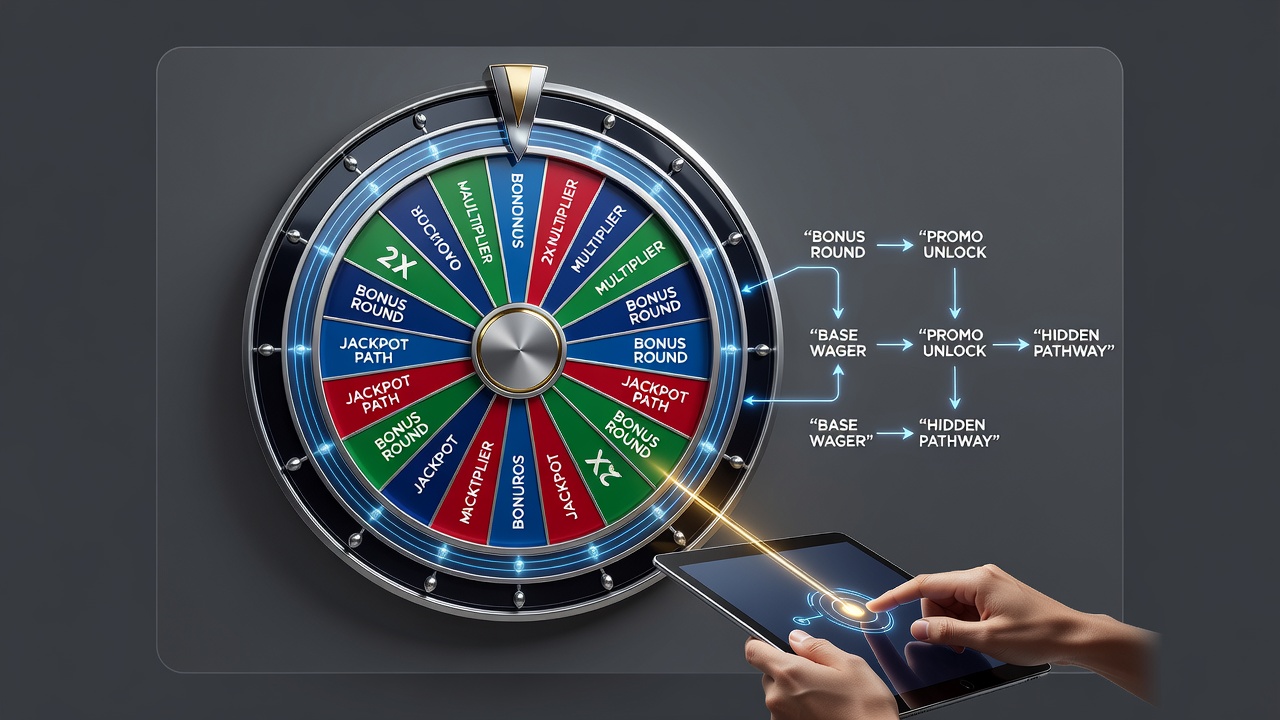
Each layer operates with its own set of rules governing how much of every bet counts toward completion, which means a player must calculate the effective value of continuing rather than starting a new session elsewhere. Observers note that many platforms display progress trackers that update in real time, allowing participants to see exactly how close they sit to the next reward tier without needing external tools.
When the second image appears here roughly halfway through the piece, it illustrates how these trackers integrate directly into the game lobby for seamless monitoring.
Regional Variations in Implementation
Platforms licensed in multiple jurisdictions adjust layer depth according to local rules, with some regions capping the number of sequential bonuses while others permit deeper stacking provided transparency standards are met. A 2025 report issued by the Australian Communications and Media Authority highlighted that wheel game promotions featuring four or more layers saw higher completion rates than simpler two-layer offers during the preceding quarter.
Players who move between sites often discover that the same wheel title can present entirely different pathway lengths depending on the operator's current campaign calendar, which resets on a monthly or quarterly basis. Industry analysts tracking these patterns through anonymized transaction data observe that completion of the full sequence tends to cluster around the final week of each promotional period.
Technical Integration and Tracking Systems
Backend systems record every qualifying bet against the active layers simultaneously, applying the correct contribution percentage automatically so that no manual intervention is required from the player. This automation reduces disputes and allows operators to run overlapping campaigns without conflicting calculations.
Academic researchers at the University of Nevada, Reno published findings in early 2026 demonstrating that clear visual indicators of remaining requirements correlate with longer average session durations across roulette and big-wheel variants. Their analysis covered transaction logs from several major platforms and identified consistent patterns in how players adjust bet sizes once they near a layer threshold.
Future Adjustments Anticipated in Mid-2026
Regulatory updates scheduled for review in July 2026 across several North American and European markets are expected to refine disclosure requirements for layered offers, particularly around the visibility of contribution rates for wheel games. Operators have already begun testing revised interfaces that surface these details earlier in the player journey.
These changes build on existing frameworks without disrupting the core sequence of unlockable rewards that have proven effective at sustaining engagement. Continued monitoring by trade associations will determine whether the adjustments alter completion rates or simply standardize presentation across borders.
Conclusion
Layered promo structures in wheel games function as interconnected sequences that guide participation through defined milestones while maintaining distinct rules for each stage. As platforms refine their tracking tools and regional regulators finalize disclosure standards ahead of July 2026, the pathways available to players will continue evolving in measurable ways documented through industry reports and academic studies.