The Development of Multi-Tiered Bonus Frameworks for Roulette in UK Online Settings
Riley Hoffmann · Aug 17, 2026
The Development of Multi-Tiered Bonus Frameworks for Roulette in UK Online Settings
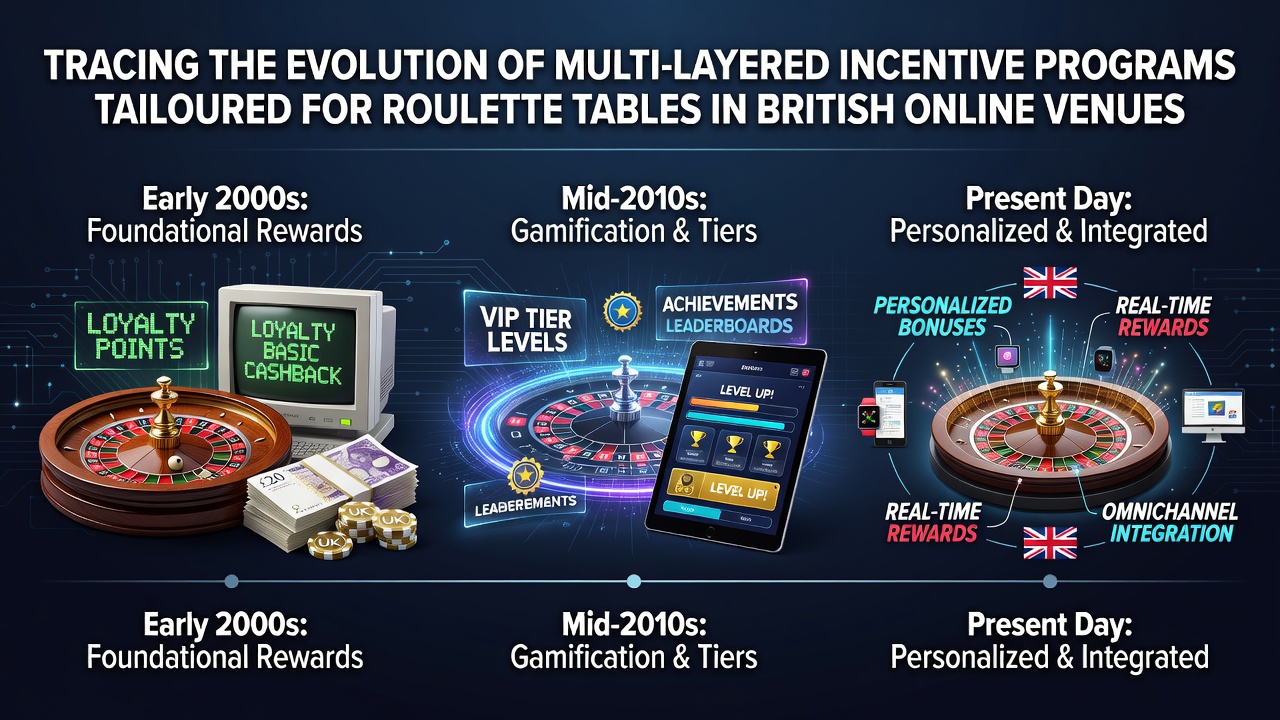
Multi-layered incentive programs for roulette tables in British online venues have shifted from straightforward deposit matches and free spin allocations toward intricate systems that combine welcome packages, ongoing loyalty tiers, cashback mechanisms, and contribution-based wagering adjustments, and this progression reflects broader changes in platform design along with regulatory adjustments across the sector. Observers note that early implementations focused primarily on initial player acquisition while later iterations incorporated retention layers that reward consistent table activity through points accumulation and exclusive table access.
Initial Structures in the Early Online Era
During the first wave of British online roulette platforms, incentive designs centered on single-layer welcome bonuses that typically offered a fixed percentage match on deposits combined with a set number of spins allocated to wheel-based games, and data from industry analyses shows these programs often required straightforward wagering thresholds before any withdrawals became possible. Those who studied platform growth during this period point out that roulette contributions to playthrough requirements sat at standard rates without the nuanced weighting seen in subsequent years, which meant players encountered uniform conditions across table and slot products alike.
Take one analysis of archived bonus terms where experts found that most offers remained static for months at a time with little personalization based on individual play patterns, yet the approach proved effective for drawing new accounts during market expansion phases. And because platforms operated with fewer overlapping reward categories, the overall structure stayed simple enough for users to track manually without dedicated tracking dashboards.
Introduction of Tiered and Recurring Layers
As competition intensified, British venues began stacking additional incentive layers onto base offers, creating programs that blended initial match bonuses with recurring reload deals, loyalty points convertible to table credits, and periodic cashback percentages applied specifically to roulette losses. Research indicates that by the mid-2010s these stacked systems started differentiating roulette contribution percentages from other game types, often assigning lower weighting to wheel games to balance operator risk exposure across the portfolio.
What's interesting is how loyalty ladders emerged as a distinct layer, where players advanced through multiple status levels by accumulating points from roulette wagers, unlocking higher cashback rates and faster withdrawal processing as they climbed. One study of player behavior patterns revealed that those engaging with tiered structures tended to extend session lengths compared to flat-bonus recipients, although the exact drivers behind this shift remain tied to individual platform implementations rather than universal trends.

Integration of Technology and Personalization
Advancements in platform analytics allowed operators to refine multi-layered programs further by introducing dynamic elements such as personalized reload offers triggered by recent roulette activity levels and segmented cashback rates that adjusted according to weekly loss thresholds. According to reports from the European Gaming and Betting Association, these technology-driven adjustments helped align incentive costs more closely with revenue patterns while maintaining player engagement across extended periods.
Yet the layering process also required clearer communication of terms, since overlapping conditions around wagering contributions, expiry dates, and eligibility criteria could create complexity for users navigating multiple active promotions simultaneously. Observers note that many platforms responded by developing in-app trackers that displayed real-time progress toward each layer's requirements, reducing friction while preserving the depth of the reward structure.
Developments Observed Through August 2026
By August 2026, several British online venues had expanded their roulette-specific incentive layers to include hybrid elements such as tournament entry tickets earned through regular play combined with progressive jackpot contributions funded partly by bonus activity, and figures from market monitoring organizations show continued refinement of contribution percentages to reflect evolving game popularity and risk profiles. Those who've examined operator reports during this timeframe highlight the growing presence of cross-layer mechanics where loyalty points could offset portions of wagering requirements on higher-tier bonuses.
But here's the thing: platforms also introduced safeguards within these multi-layered systems, including mandatory cooling-off reminders tied to cumulative bonus usage and clearer separation between deposit-funded play and incentive-generated balances. Data shows this approach helped maintain compliance with broader responsible gaming frameworks without dismantling the complexity that had become standard in the roulette segment.
Conclusion
The evolution of these multi-layered incentive programs demonstrates a clear trajectory from basic acquisition tools toward sophisticated retention ecosystems tailored around roulette tables, and external sources such as academic reviews from the University of Nevada, Reno International Gaming Institute continue to document how contribution weighting, tier progression, and technological personalization have become core components. British online venues maintain these structures through ongoing adjustments that balance player appeal with operational considerations, resulting in programs that now feature interconnected layers rather than isolated offers.