UK Gambling Revenue Reaches £4.3 Billion in Q2 2025/26 as Remote Sectors Drive 6.6% Growth While Participation Holds Steady at 48%

The UK Gambling Commission has dropped its latest quarterly industry statistics covering July to September 2025, otherwise known as Quarter 2 in the financial year running April 2025 to March 2026, and the numbers paint a picture of steady expansion fueled by digital channels even as the number of people dipping into gambling stays put.
Breaking Down the Gross Gambling Yield Surge
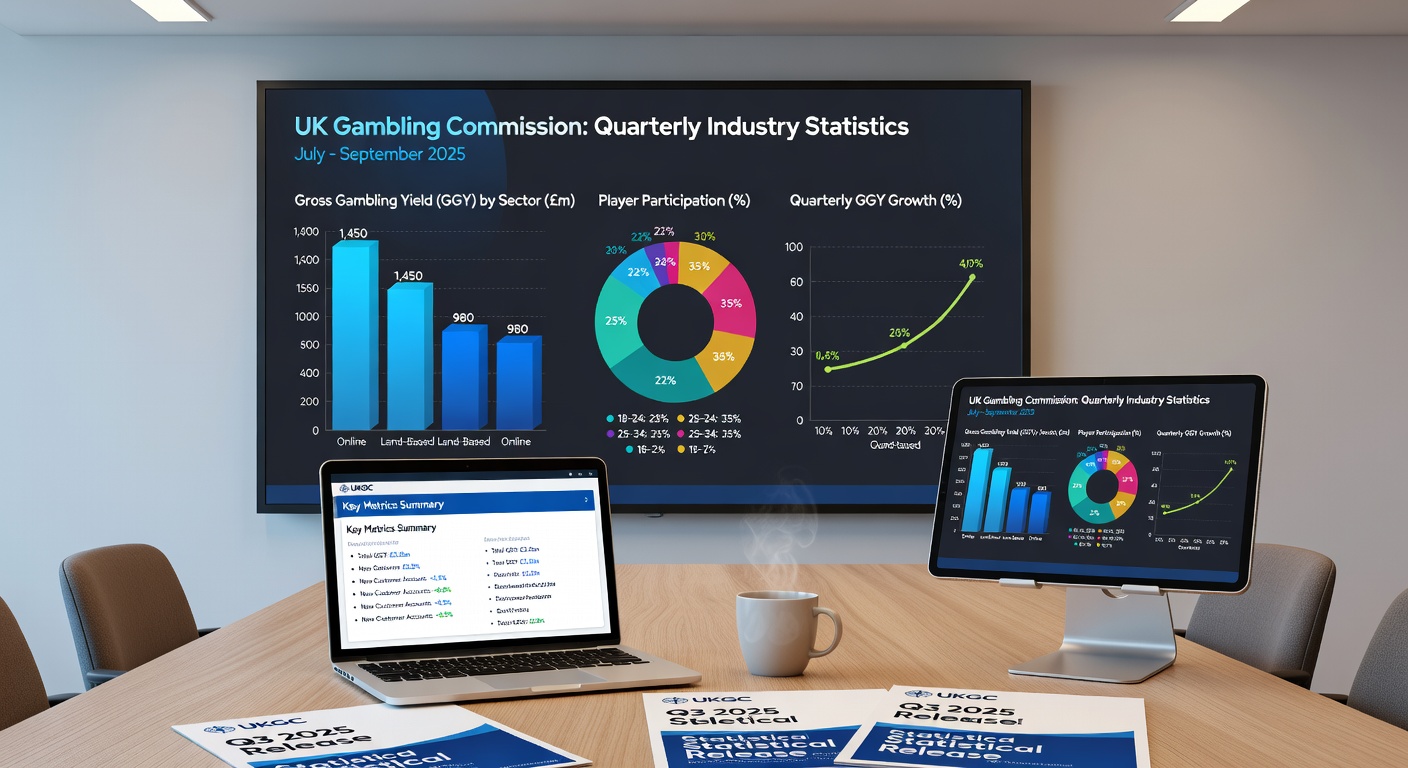
Gross Gambling Yield—or GGY, for those tracking the metrics—clocked in at £4.3 billion across Great Britain for this period, marking a solid 6.6% jump compared to the same quarter a year earlier; experts point to remote gambling, particularly online casinos and lotteries, as the main engines behind this uptick, while non-remote segments like land-based betting shops showed more modest gains or flatlined in spots.
What's interesting here is how the remote sector, which includes everything from slots spun on phones to virtual bingo halls, pulled ahead with double-digit growth rates in key areas—online casinos alone contributed a hefty slice of that £4.3 billion total, bolstered by lotteries that saw players flocking to digital platforms amid convenient access; data from combined operator returns underscores this shift, revealing that remote GGY now dominates the landscape, outpacing traditional venues by a widening margin.
And yet, the overall pot didn't just swell from one source; betting shops and arcades chipped in too, although their contributions remained smaller, with figures showing a reliance on high-street footfall that's increasingly competing against app-based alternatives—turns out, the digital wave keeps building momentum quarter after quarter.
Stable Participation Rates Amid Digital Push
Gambling participation among adults held rock-steady at 48% over the previous four weeks leading into this report, drawn from operator data cross-checked with the Gambling Survey for Great Britain (GSGB) Wave 3, which ran from July to October 2025; this consistency suggests that while revenue climbs, the pool of participants isn't expanding, hinting at higher engagement or spend per user in those already active.
People who've analyzed past trends often note how participation hovers around this 48% mark for years now, unaffected by economic swings or regulatory tweaks, yet the unchanged rate juxtaposed against rising GGY points to deeper plays within the online realm—remote bingo, for instance, drew steady crowds, while slots and casino games captured more session time per participant.
But here's the thing: the GSGB survey, blending self-reported behaviors with operator logs, provides a robust snapshot, confirming that 48% of adults gambled in some form during those four weeks, whether through lotteries at supermarkets or spins on mobile apps; observers highlight this stability as a baseline, especially as March 2026 approaches with full-year figures still pending for the April-to-March cycle.
Remote Gambling Takes the Lead: Casinos and Lotteries Shine
Diving deeper into the remote breakdown, online casinos emerged as the standout performer, with GGY surging thanks to popular titles like slots and table games that players access anytime via apps or browsers; lotteries followed suit, their digital sales channels boosting yields as people opt for quick online purchases over physical tickets, and this duo accounted for the bulk of that 6.6% year-on-year lift.
Take one set of figures from the report: remote casino GGY rose sharply, reflecting not just more users but higher stakes and longer sessions, while lotteries benefited from seamless integration with betting apps; non-remote counterparts, such as physical casinos and bingo halls, lagged with slimmer increases, underscoring a broader digitalisation trend that's reshaping where and how Brits place their bets.
So, as Q2 wrapped in September 2025, the data captured a sector leaning heavily into tech-driven revenue streams; experts who've pored over these quarterly releases observe that remote segments now represent over half the total GGY in many periods, a pattern holding firm even into early 2026 projections.
Comparing Year-on-Year: What Changed and What Didn't
Year-over-year, the 6.6% GGY growth stacks up against Q2 2024's figures, where remote channels already showed promise but hadn't yet hit these heights; online casinos posted the strongest gains, up by percentages in the teens according to operator returns, while lotteries edged forward on the back of digital sales spikes during summer months.
Non-remote betting, meanwhile, grew modestly at low single digits, hampered by fewer visits to tracks and shops, although football season bets provided a seasonal bump; participation data from GSGB Wave 3 mirrors the prior wave's 48%, with no notable shifts in demographics—men and women hovered around expected splits, and age groups maintained their patterns.
It's noteworthy that this quarter's stats, released amid March 2026 discussions on full-year forecasts, reinforce a narrative of online dominance; those studying the sector point out how stable user numbers paired with revenue growth often signals intensified play, particularly in high-yield remote casino environments.
- Remote casinos: Key driver of 6.6% overall increase.
- Lotteries: Strong digital uptake fueling yields.
- Participation: Locked at 48%, per GSGB and operators.
- Total GGY: £4.3 billion, highest in recent quarters.
Broader Context: Digitalisation in Full Swing
The report highlights ongoing digitalisation as a core theme, with remote GGY comprising a larger share than ever, even while total adult participation refuses to budge from 48%; this dynamic plays out across Great Britain, from London apps to Scottish lotteries, and underscores how operators pivot toward mobile-first strategies to capture value from existing players.
One researcher tracking these trends noted in analyses how GSGB Wave 3's methodology—surveying thousands alongside real-time operator data—ensures accuracy, revealing unchanged behaviors like weekly lottery buys or occasional casino logs; yet, the revenue side tells a different story, with average spends per participant ticking up subtly in remote spaces.
And as the financial year nears its March 2026 close, these Q2 numbers set expectations for continued remote-led growth; figures from the coverage emphasize that stable participation doesn't equate to stagnant industry—far from it, since deeper pockets in digital gambling keep the yields climbing.
Conclusion
In wrapping up Q2 of the 2025/26 financial year, the UK Gambling Commission's statistics deliver clear signals: £4.3 billion in GGY, propelled by remote casinos and lotteries amid a steady 48% participation rate that blends operator returns with GSGB Wave 3 insights; this combination spotlights a digital-heavy future for the sector, where growth flows from tech adoption rather than new recruits, and as March 2026 brings the annual tally into focus, the trajectory points toward sustained online momentum.
Those following the beat know these quarterly drops often preview bigger shifts, with remote channels holding the reins; the data, solid and survey-backed, leaves little room for surprise—digitalisation marches on, yields rise, and participation? It just holds the line.